
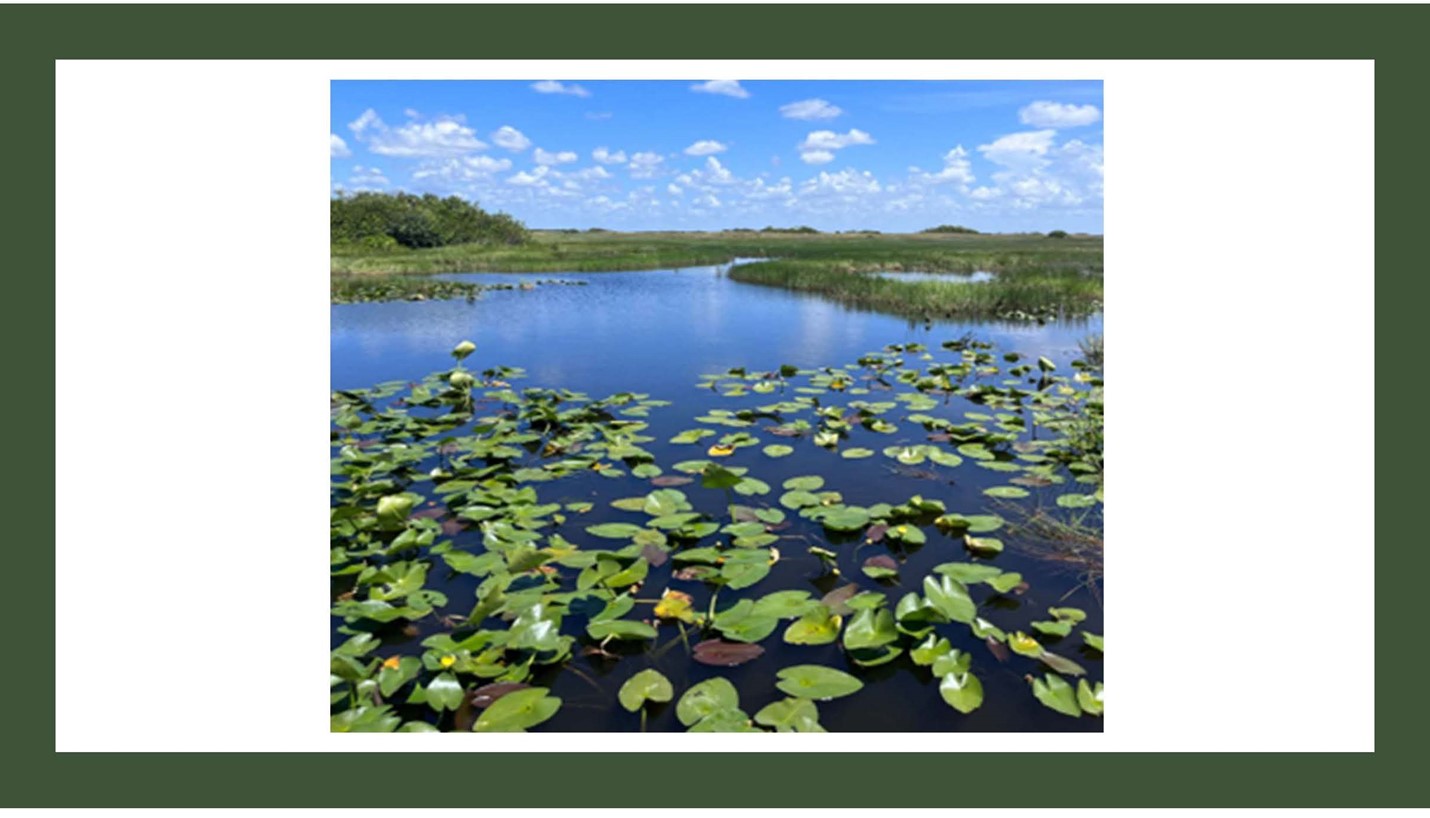
Sub-tropical South Florida was once largely a continuum of wetlands stretching into what we know today as the Everglades. Water coursed its way slowly from freshwater sloughs, through transverse glades and through mangrove forests, feathering into the bay and freshening the estuary. Life in South Florida is adapted for such conditions: the meandering of fresh water where it meets the ocean has given rise to incredible biodiversity: wading birds, amphibians, crabs, and and all sorts of critters that flourish in brackish water. But paradise has sadly been lost. First the wetlands were drained by a network of canals. Then urbanization transformed natural areas into hard surfaces: roads, buildings, compacted soil. Where once the water crept slowly towards the sea, where it once pooled in wetlands, it now rushes off of pavement or charges through canals and carries all manner of trash, filth, and pollution into our waterways.

It’s time for a shift in the way we do business. We need to get away from solely relying on gray infrastructure, like our traditional stormwater conveyance system, which shunts polluted water into the bay too quickly, allowing less time for debris to settle out, less time for pollution to break down before it flows out of a pipe and into a waterbody. Though South Florida has been developed with little consideration for the natural rhythms and flows of our water environment, we can start to do business differently when it comes to integrating the human and non-human environment.
Green infrastructure originated as a term in a 1994 report by former Chair of the Florida Greenways Commission, Buddy McKay. It was defined by the EPA in the 2019 Water Infrastructure Improvement Act as “the range of measures that use plants, their soil systems, permeable pavement or other permeable surfaces or substrates, stormwater harvest and reuse, or landscaping to store, infiltrate, and evapotranspirate stormwater and reduce flows to sewer systems or to surface waters.” In more plain terms, what green infrastructure consists of is public space that is used to manage stormwater and reduce their flows to sewage systems and surface water. The Florida Department of Environmental Protection calls for green infrastructure to “protect our water quality by using nature-based methods to manage stormwater near where it falls.”
The implementation of green infrastructure provides a natural solution to the societal needs for flood control. Beyond the significance of stormwater management, green infrastructure benefits communities in a number of ways – improved water quality, mitigation of heat through evapotranspiration, and reduced air pollution to name a few. Also worth mentioning is the psychological hypothesis known as biophilia, which suggests a connection between the well-being of the human mind and the health of the natural world it inhabits.
As a graduate of the University of Miami’s Rosenstiel School of Marine and Atmospheric Science and someone who was born and raised (and still lives) in New York City, I wanted to compare the green infrastructure in place in these two cities. As I’ve been able to dive into the history of Miami’s infrastructure and waterways, I’ve become more aware of New York’s developments, implementation, and commitment to green infrastructure. Seeing just how these ideas have come to fruition in my hometown while learning about the ups and downs of Miami’s balance of urbanization was a motivating force for writing this post!
In an effort to gain more insight into green infrastructure in Manhattan, I ventured across the East River to Rutgers Park – a small sliver of greenery that overlooks the river. As shown in the pictures below, and according to an NYC Parks employee that I spoke to, these oases of flora serve as both rain gardens and to prevent flooding and run-off into the river. Also visible in these images are the immaculately maintained plant life, as well as numerous places for people to relax and enjoy the view.

One of the key aspects of green infrastructure in Manhattan is the presence of numerous parks and open spaces. Central Park, the iconic urban oasis, serves as a prime example of a large-scale green area that provides recreational opportunities and preserves natural habitats within the city. Additionally, smaller parks, pocket parks, and community gardens are distributed throughout the borough, offering residents and visitors places to relax, exercise, and connect with nature.

Another vital component of green infrastructure in Manhattan is the emphasis on sustainable transportation. The city has been working on expanding its network of bike lanes, pedestrian-friendly streets, and public transportation options to reduce reliance on private vehicles and promote cleaner modes of transportation. Initiatives like Citi Bike, a bike-sharing program that is also available in some parts of Miami, and pedestrian plazas, have been implemented to encourage active mobility and reduce carbon emissions.
Furthermore, Manhattan has seen a rise in green building practices, with sustainable design principles being integrated into new construction projects and retrofits. The installation of green roofs and the use of energy-efficient materials and technologies have become increasingly prevalent. These eco-conscious buildings contribute to energy savings, improve air quality, and reduce the urban heat island effect. An example of this is the green roof at New York University’s Langone Medical Center’s Alumni Hall, where the existing roof has been covered in vegetation over a waterproofed membrane. This roof is capable of retaining over 7,000 gallons of stormwater.
Green infrastructure techniques have been employed to address stormwater management and reduce the strain on the city’s sewer systems. The incorporation of rain gardens, bioswales, and permeable pavement helps capture and filter stormwater runoff, allowing it to recharge groundwater. This means that, after a heavy rain, the stormwater system is less likely to be overwhelmed.
Overall, green infrastructure in Manhattan demonstrates a commitment to creating a more sustainable and resilient urban environment. By integrating green spaces, sustainable transportation options, energy-efficient buildings, stormwater management systems, renewable energy sources, and urban agriculture, the borough strives to mitigate climate change impacts, enhance biodiversity, and improve the well-being of its residents.
Miami not only needs to catch up; it can lead the GI challenge. It has to. Miami-Dade county is increasingly subject to flooding due to climate change impacts and inadequate infrastructure. This inadequate infrastructure is shunting polluted water into the bay, killing it. Moreover, socially vulnerable communities disproportionately face climate change impacts, and there are few places in the U.S. with income disparities as stark as in Miami-Dade.
Miami Waterkeeper is leading the shift to GI in Miami. We have received funding from the U.S. Environmental Protection Agency (EPA) to address the as-yet piecemealed resiliency planning efforts. We will be creating 6-8 GI designs in a range of locations within the county’s built environment. Some of the innovative GI to be advanced by the project include native vegetation, greenways, living streetscapes with pervious pavement and wetland parks. As each project will consider the local environs and balance engineering constraints with community concerns, no two projects will be alike. Miami Waterkeeper will engage the community through townhalls, and digital surveys. Stay tuned for information on how to share your insights on the future of our shared community.
Our teaming partners at Local Office Landscape and Urban Design (LOLA) will handle the technical aspects, including GIS analysis, technical feasibility studies, and design drawings. The project will culminate in complete conceptual design renderings suitable to go to the next phases: permitting and construction. Additionally, our project partners at FIU will also contribute to research on the effectiveness of green infrastructure on reducing stormwater runoff and removing contaminants and nutrients by collecting and analyzing real-world data on two existing green infrastructure community projects in MDC.
I was lucky enough to meet with two members of the LOLA team, Walter Meyer and Eleanor Gibson, in-person, to discuss the past, present, and future of green infrastructure in Miami and New York City. They informed me in great detail on their projects on Miracle Mile and Giralda Plaza in Coral Gables, discussing how they draw inspiration from the natural world and applying what can be learned and observed from nature into urban settings. While there are few green infrastructure projects built in Miami, the Miracle Mile and Giralda Plaza projects serve as models, and more importantly, they are highly effective in clearing stormwater off the streets.

Credit: Local Office Landscape and Urban Design
Because GI solutions should honor the local environment, Mr. Meyer specifically mentioned the Everglades as a point of reference for Miami. He noted that, per a 2010 scientific paper, groundwater is lower in the center of Everglades tree islands, particularly when the soil drains quickly. Therefore the basis of many GI projects is structural soil, which is a man-made substrate that allows for water to permeate the ground in a more effective manner due to its larger-than-normal gaps between each speck of soil. This material also allows for tree roots to connect in a more elaborate manner, creating massive stretches of roots connecting to one another. As the interconnected tree roots slurp up water, their demand lowers the water table due to structural vastness– just like how tree and plant roots from the Everglades to Biscayne Bay used to be connected in a sheer continuum. This is just one example of how LOLA aims to combine the teachings of nature into our urban sprawl in an effort to ensure better stormwater management practices.

Credit: Local Office Landscape and Urban Design
Through the EPA-funded green infrastructure project that Miami Waterkeeper and its partners are teaming on, we hope to engage the community in lots more examples!

Walter Meyer (LOLA), Eleanor Gibson (LOLA), Jack Kranes (Miami Waterkeeper)
Originally published at https://www.miamiwaterkeeper.org/green_infrastructure_in_miami