
Dredging is underway at Port Everglades.
The Sand Bypass Project is excavating a 10.8-acre pit to trap sand for beach renourishment. Construction began in October 2025. Within weeks, reports of sediment plumes began surfacing.
We’ve seen what dredging can do to Florida’s Coral Reef.
From 2013–2015, dredging at PortMiami smothered reefs with sediment, significantly impacting at least 278 acres of coral habitat. A federal assessment found 95% of the surveyed reefs no longer supported productive coral communities. Independent science later estimated that millions of corals were likely killed.
Now, similar risks are emerging in Broward County.
The Port Everglades reef hosts one of Florida’s last naturally occurring staghorn coral populations—recently declared functionally extinct statewide—and one of only two known shallow-water breeding aggregations of threatened queen conch in the continental U.S. For reefs already battling disease, warming waters, and decades of coastal pressure, sediment can push them past recovery.
And this project is just the beginning.
A much larger deepening and widening of the Port Everglades shipping channel is anticipated in the near future and could put over 10 million corals at risk from dredging. What happens now will set the precedent for how future dredging is managed.
Miami Waterkeeper is monitoring this project using boats, divers, aircraft, and satellite imagery. We are documenting conditions above and below the surface to ensure impacts are not ignored.
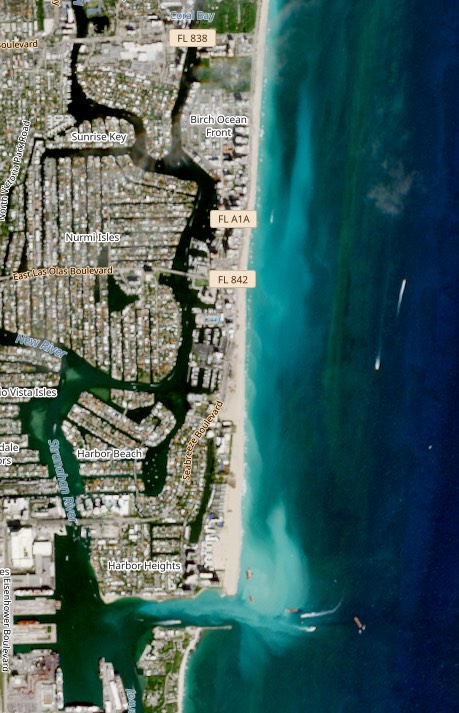
Satellite image taken on January 9, 2026, presenting a sediment plume from the Sand Bypass project dredging.
Campaign Update
On August 4, 2026, Miami Waterkeeper, the Center for Biological Diversity, Florida Wildlife Federation, and the Diving Equipment & Marketing Association sued the U.S. Army Corps of Engineers and the National Marine Fisheries Service for violating the Endangered Species Act when permitting the Sand Bypass project.
The groups, represented by Earthjustice, along with co-plaintiff Center for Biological Diversity, filed a motion seeking an injunction to halt work until the Corps and the Fisheries Service reassess the project’s harm to critical marine habitat and threatened corals and queen conch.
Within days of filing the lawsuit, the Army Corps agreed to halt all dredging activity for the Port Everglades Sand Bypass Project until they conduct a new environmental consultation.
This major win means our voices are being heard! Continue applying pressure on the agencies in charge by taking action below.
Take Action
This campaign has two important actions. Together, they help hold decisionmakers at every level accountable.
1. Contact the Broward County Commission
Email the Broward Board of County Commissioners and demand strong project oversight, including strict sediment controls, real-time transparency, effective monitoring and project mitigation, and immediate enforcement if limits are exceeded.
2. Contact Your Members of Congress
Email your elected officials to ask them to support and advocate for congressional oversight of the Sand Bypass project at Port Everglades.